
How to Spot Grub Worms Before They Destroy Your Lawn
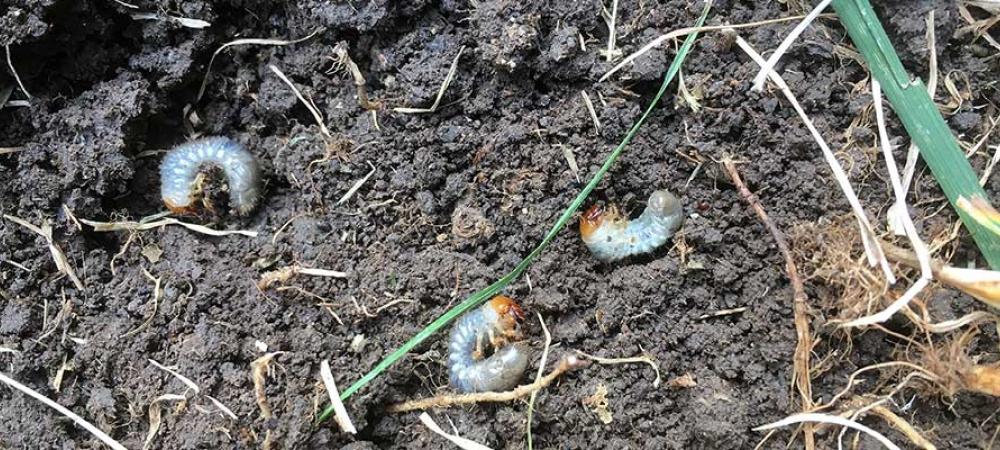
Grub worms are the larval stage of June beetles and other scarab beetles. They are white, C-shaped, and roughly the size of a thumb tip. They live 1 to 4 inches below the soil surface and feed on the roots of warm-season grasses like Bermuda.
In small numbers they cause little damage. However, when populations grow, they can sever enough roots to kill large sections of turf within a few weeks. By the time dead patches appear in late summer, the root system underneath is already gone.
Signs You Have a Grub Problem
Be proactive! Give your lawn a quick check to see if you may have a grub problem. Look out for these signs:
- Turf that lifts like carpet. Grab a section of dead grass and pull upward. If it detaches from the soil with little resistance and the roots are missing, grubs have been feeding there.
- Spongy turf underfoot. Soft or uneven ground during summer can signal root damage already underway below the surface.
- Armadillo or bird digging. Armadillos dig cone-shaped holes hunting for larvae. Birds pecking divots across the turf are another sign the same food source is present below.
- June beetles at porch lights. Adult beetles swarming lights on early summer evenings means egg-laying is underway, and larvae will follow within weeks.
- Brown patches that do not respond to watering. Drought-stressed grass rebounds when irrigated. Grass with no roots does not. If a section stays dead despite water, check below the surface.
To confirm, cut a 12-inch by 12-inch section of turf at the edge of a damaged area, peel it back, and count the white larvae in the top few inches of soil.
Why Treatment Timing Matters So Much
The best preventative treatment window opens in late May and closes in June. This is when eggs have just been laid and larvae are small, near the surface, and easiest to control. Preventative products applied during this window create a barrier in the soil before feeding begins.
Miss that window and your options change. Curative treatments applied in late summer can kill existing grubs, but they cannot restore the roots already consumed. Severely damaged turf often requires overseeding or sodding regardless of whether the grubs are eliminated.
Get Ahead of Grub Season with Professional Lawn Pest Control
If you have seen any of the warning signs above, or if you want to protect your lawn before the damage starts, Bob Short's LawnEnvy offers lawn pest control in Texas. Contact us today for a free estimate.