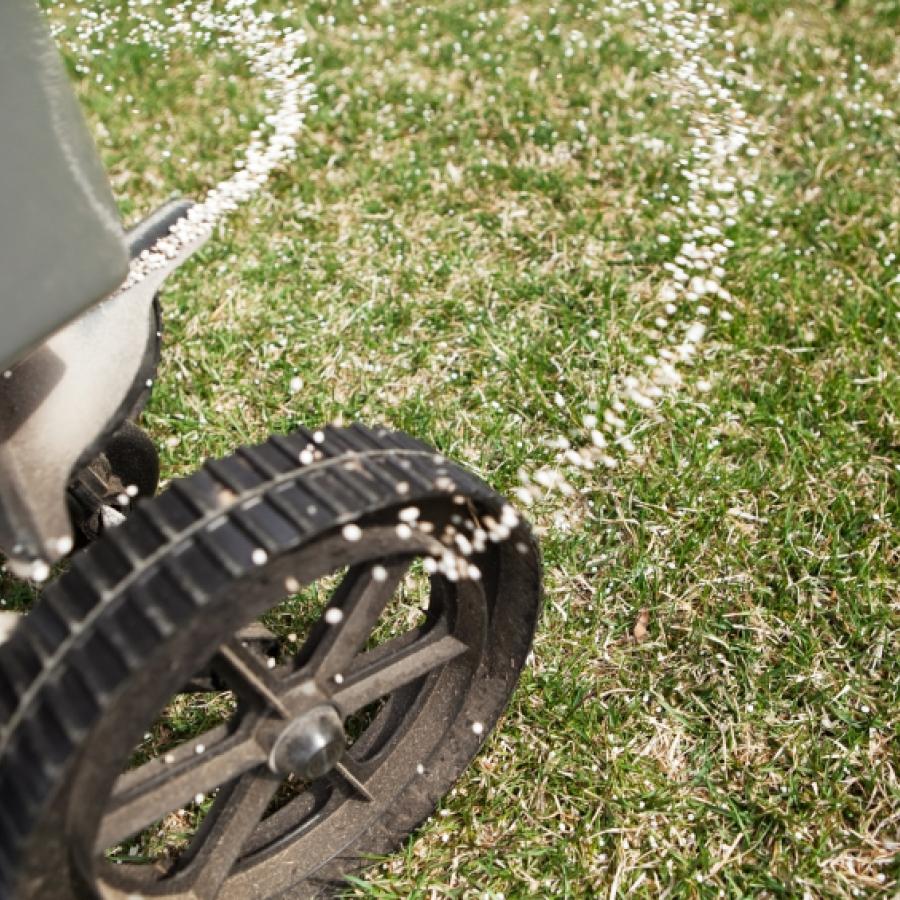
Overseeding after liquid aeration is often beneficial, particularly for lawns that are thin or uneven. By loosening compacted soil, liquid aeration can improve seed-to-soil contact and support better germination. That said, overseeding isn’t always necessary. Read on to learn when it makes sense and when it doesn’t.
When Liquid Aeration Pairs Well with Overseeding
Liquid aeration improves how water and nutrients move through compacted soil. When overseeding is done shortly after, seeds can settle more effectively and access moisture more consistently.
Overseeding after liquid aeration is most helpful when:
- Grass coverage is thin
- Bare or compacted areas are visible
- The lawn struggles to thicken naturally
- You’re trying to improve density before seasonal stress
Timing matters when it comes to overseeding. Schedules should align with your grass’s natural growth cycle.
Best timing for overseeding after liquid aeration
Overseeding is typically most effective:
- In early fall for cool-season grasses (like Kentucky Bluegrass, Perennial Ryegrass, Tall Fescue, and Fine Fescue)
- In late spring or early summer for warm-season grasses (like Bermuda, Zoysia, St. Augustine, Centipede, and Bahiagrass)
When Overseeding May Not Be Necessary
If your lawn is already dense and healthy, liquid aeration alone may be sufficient. Overseeding adds value primarily when coverage needs improvement, not as a required step every time. It tends to add the most value when a lawn has visible thinning, patchy areas, or long-term compaction issues that have limited grass density. Lawns that are already responding well to proper mowing, watering, and fertilization may not need overseeding every time liquid aeration is applied.
Ultimately, overseeding should be based on lawn condition and goals. While it's usually helpful, it shouldn't be seen as an automatic add-on. Evaluating turf density, seasonal timing, and grass type helps determine whether overseeding will provide meaningful benefits or if liquid aeration alone is sufficient. If you're not sure, contact a professional from Bob Short's LawnEnvy to come check for you!
Conclusion
Overseeding after liquid aeration can improve lawn density and establishment, but it should be based on lawn condition and seasonal timing. While, it can support thicker, more uniform growth, overseeding isn’t necessary for every lawn. The decision should be based on current lawn condition, seasonal timing, and long-term goals rather than applying seed by default.
Reach out to Bob Short's LawnEnvy to get a second opinion or to get a free quote on overseeding services!