
When Is The Best Time For Liquid Aeration?
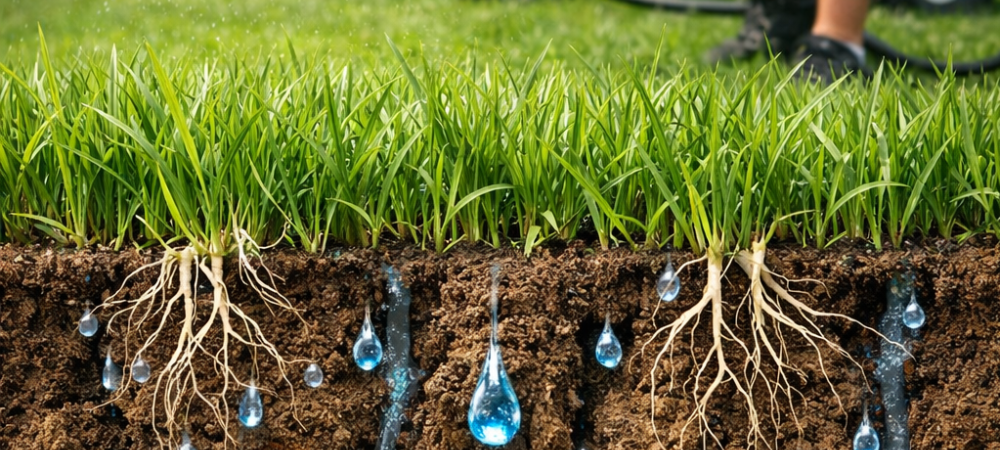
The best time for liquid aeration is during your lawn’s active growing season, when grass can recover quickly and roots can take advantage of improved soil conditions. For most lawns, this means spring or fall, depending on grass type.
The Biggest Factor in Liquid Aeration Timing is Grass Type
- Cool-season grasses (fescue, bluegrass, rye):
Early spring or early fall, when temperatures are moderate and grass is actively growing. - Warm-season grasses (bermuda, zoysia):
Late spring through summer, once the lawn has fully greened up.
Applying liquid aeration during these windows allows roots to respond immediately to improved soil structure.
Other Factors To Consider
Soil moisture levels
Soil moisture plays a key role in how liquid aeration moves through the ground. Overly dry soil can limit penetration, preventing the solution from reaching deeper compaction layers. Overly saturated soil can cause uneven movement or runoff.
Moderately moist soil helps the liquid disperse evenly, improving contact with compacted areas and allowing the treatment to work as intended.
Temperature and Rainfall
Temperature affects both soil biology and grass activity. In cooler or excessively hot conditions, soil activity slows and root growth is limited.
Rainfall can help carry liquid aeration deeper into the soil profile, but excessive rain shortly after application may dilute or reduce effectiveness. Balanced conditions support consistent absorption and soil interaction.
Current Lawn Stress
Lawns experiencing drought, disease, or heavy heat stress have reduced root activity. Since liquid aeration improves soil conditions rather than directly stimulating growth, stressed lawns may not respond as efficiently.
Applying liquid aeration when the lawn is relatively healthy allows roots to immediately use improved access to water, oxygen, and nutrients.
When To Avoid Liquid Aeration
Liquid aeration is generally less effective when:
- Soil is completely dry or waterlogged
- Grass is dormant
- Lawns are under severe heat or drought stress
Proper timing ensures the treatment supports growth instead of adding stress.
Can Liquid Aeration Be Done in Summer?
Yes, but only if the lawn is healthy and properly watered. Summer liquid aeration can help reduce compaction and improve water absorption, but stressed or drought-affected lawns may not respond as well.
Bottom Line
Liquid aeration delivers the best results when applied during active growth and favorable soil conditions—not simply based on season alone.
Have questions about the right timing for your lawn? Contact Bob Short's LawnEnvy to learn more about liquid aeration and lawn care options in Texas.